Overcoming Winter Woes:
Timing Cacao Harvests for Success in Florida By Jason Pepe
CACAO-CHOCOLATE TREES
Jason Pepe
1/25/20263 min read
Pepe's Fruit Trees Growing cacao (Theobroma cacao) here in Florida is one of the most exciting parts of what we do at Pepe's Fruit Trees. There's nothing quite like harvesting your own chocolate pods from trees in the backyard or small orchard—it's a true taste of the tropics right in the Sunshine State. But as any Florida cacao grower knows, our subtropical climate comes with a big challenge: pods maturing during winter. Those occasional cold snaps can wreak havoc on developing pods, turning months of care into major losses. In this post, I'll break down the problem, the real risks cold poses to your pods, and my go-to strategy to beat it—focusing hand pollination in March and April to shift your main harvest to the safe, hot summer months.
The Challenge of Winter Maturation Cacao trees love consistent warmth, ideally staying above 68°F (20°C) year-round. In South Florida (zones 10-11), we get close enough for the trees to flower and fruit almost continuously. But unlike the true equator, our winters bring cold fronts that dip into the 50s°F or lower at night, sometimes for several days. Because cacao produces flowers sporadically throughout the year, some pods inevitably start developing in fall and mature right in the heart of winter (December–February).
At Pepe's Fruit Trees, we've seen this firsthand—trees loaded with promising pods suddenly at risk when a front rolls through.
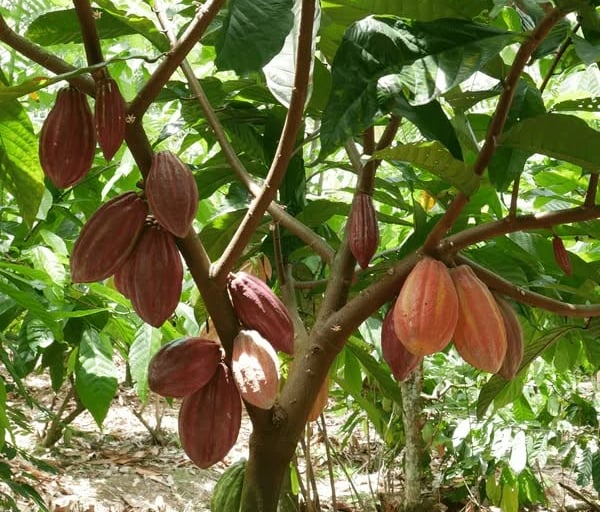
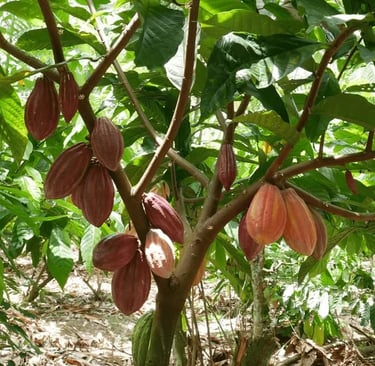
(Above: Healthy cacao pods ripening in South Florida—exactly what we want to protect!)
The Risks: How Cold Severely Damages Cacao Pods Cold isn't just uncomfortable for cacao; it can be devastating to the pods. Here's what happens:
Chilling Injury and Cell Damage — When temperatures drop below about 59°F (15°C), and especially into the 40s-50s°F, ice crystals can form in the pod's tissues. This ruptures cells, leading to water-soaked spots, cracking, and discoloration. Severe exposure causes the entire pod to blacken, shrivel, or drop prematurely.
Increased Rot and Disease — Stressed pods become easy targets for fungi like black pod rot (Phytophthora), which loves cool, humid Florida winters. What starts as a small lesion can spread quickly, ruining not just one pod but potentially infecting neighbors.
Bean Quality Issues — Even if a pod survives, cold-stressed beans inside may not ferment properly, leading to off-flavors or poor chocolate.
Overall Tree Stress — Repeated winter hits weaken the tree, reducing next season's flowering and yield.
We've observed pods deform, discolor, and abort after cold events—sometimes losing 30-50% of a winter crop in one snap. It's heartbreaking after all the effort to get them that far.
(Example of a damaged cacao pod showing discoloration and potential rot—symptoms we've seen amplified by Florida cold snaps.)
My Solution: Hand Pollinate in March & April for a Summer Harvest To dodge winter risks, the best mitigation is proactive timing: concentrate your hand pollination efforts in March and April. This sets most pods to mature during the reliably hot summer (June–September), when temps stay in the 80s-90s°F and cold is off the table. Pod maturation in Florida takes about 5-6 months under warm conditions (sometimes stretching to 7 if cooler). March/April pollination typically lands ripe pods in August–September—peak summer safety. At Pepe's Fruit Trees, we rely on hand pollination anyway (natural midges are unreliable here), so shifting focus to spring is straightforward and effective. How to Do It:
Daily Morning Sessions — Cacao flowers open early and last 1-2 days. Use a small soft brush or forceps to transfer pollen between compatible flowers (many varieties need cross-pollination). Do this March through April, skipping outside the window to minimize off-cycle pods.
(Close-up of hand pollination in action—tiny but mighty for controlling timing!)
Prep Your Trees — Light late-winter pruning encourages spring blooms. Keep nutrition balanced (extra potassium helps fruiting) and moisture consistent.
Monitor & Thin — After set, thin excess young pods if overloaded to ensure quality maturation.
Variety Tips — We favor resilient Forastero types that handle our marginal climate well.
(Ripe, vibrant pods ready for summer harvest—safe from winter chills!)This approach isn't 100% perfect—some natural set might sneak in—but it dramatically reduces winter exposure, often saving the bulk of your crop. Yields are healthier, diseases easier to manage, and harvesting happens in shorts and sunshine!
Final Thoughts If you're growing cacao in Florida, don't leave your pods to winter's mercy. By timing hand pollination to March and April, you take control and align harvests with our best weather. It's worked wonders for us at Pepe's Fruit Trees, and it can for you too. Questions? Drop a comment or reach out—we're always happy to chat cacao! Happy growing, and here's to summer pods full of chocolate potential!
Jason Pepe
Pepe's Fruit Trees
Help
Questions? Reach out, we're here. Text: 954-740-4070
pepe@pepesfloridafruittrees.com
Advertising Disclosure:
Pepesplants.com and Pepesfloridafruittrees.com is a participant in the Amazon Services LLC Associates Program and also Googles affiliate advertising program. The programs provide a means for web sites to earn revenues from advertising and or sales.
Content Disclosure
Use all information on this site at your own risk.
The content here is based on the publishers personal experience in the green industries.
Although every reasonable effort has been made to ensure the accuracy of the information contained on this site, absolute accuracy cannot be guaranteed. This site, and all information and materials appearing on it, are presented to the user "as is" without warranty of any kind, either express or implied Site created and managed by Pepe's Fruit Trees. Copyright 2026 - All Right Reserved Pepe's Fruit Trees - Davie, Florida | 954-740-4070 | pepe@pepesfloridafruittrees.com